Can the Houthis hold on to Yemen’s strategic western coast?
Houthi coastal advances face hurdles: geography, local resistance and fierce government counterattacks.
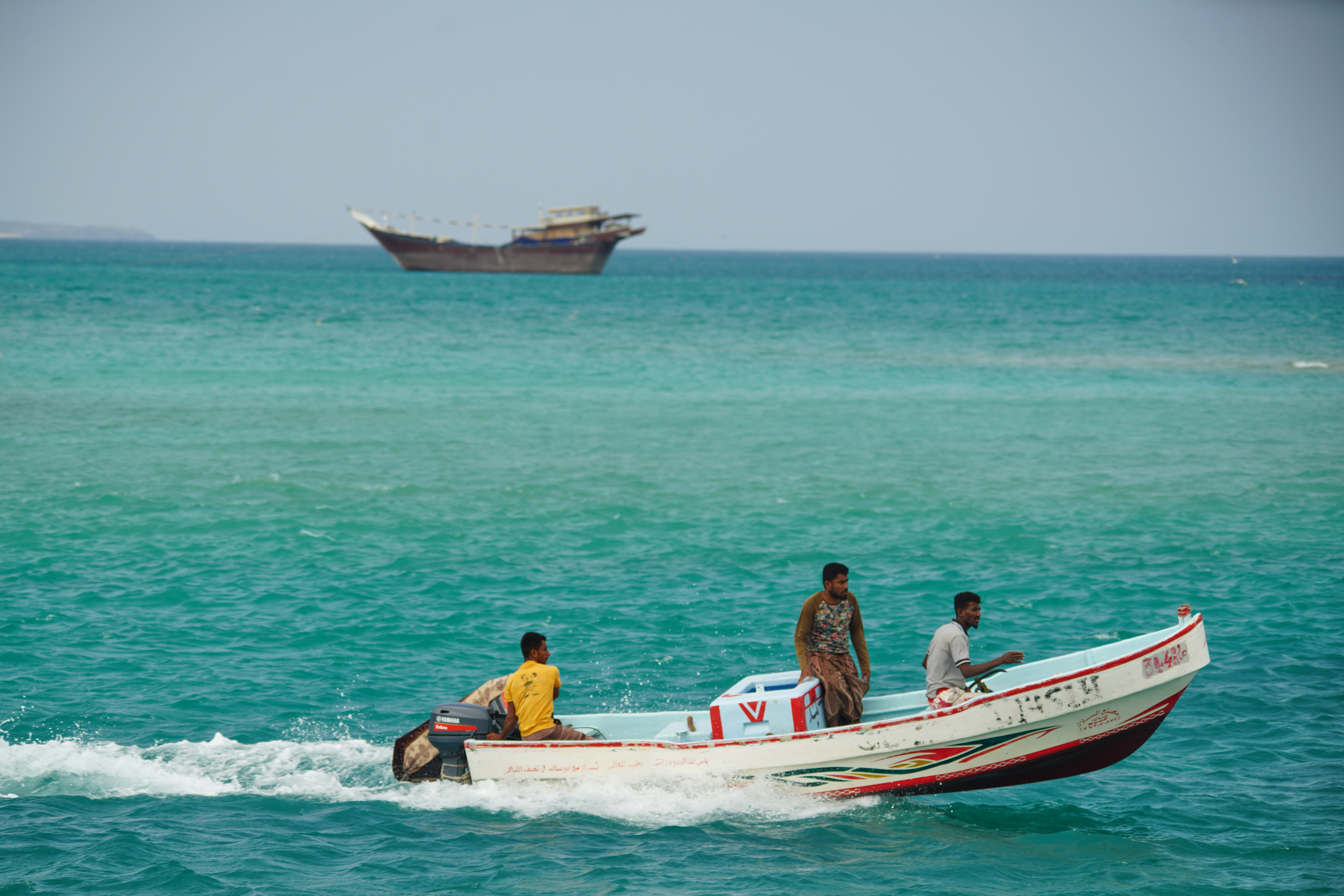

Following rapid territorial gains on Yemen’s Red Sea coast, the Houthi movement’s ability to maintain control over the strategic Bab al-Mandeb area now faces major military and logistical tests.
The military escalation, which has intensified over the past two and a half months, recently altered a map of control that had remained almost static for the past four years. But while Houthi forces have successfully pushed into coastal territories, seizing the Greater and Lesser Hanish islands and Mayyun Island, retaining these gains presents a deeply complex challenge.
Recommended Stories
list of 3 items- list 1 of 3Thousands flee to Djibouti amid renewed Yemen fighting
- list 2 of 3Benchmark US government bond yield hits 19-year peak as oil prices surge
- list 3 of 3Saudi Arabia promises to respond to Houthi attacks ‘firmly’
Saeed Thabit, Al Jazeera’s bureau chief in Yemen, said that the group’s geographical achievements also bring with them immediate structural vulnerabilities.
“We are talking about an area extending from Hodeidah to Mocha and Bab al-Mandeb, in addition to the islands in the Red Sea,” Thabit said. “Securing this extension requires large forces and continuous supplies, especially since the open nature of the coast makes it easy for aircraft to monitor and target movements.”
This vast geographical hurdle was echoed by Ahmed al-Shalafi, Al Jazeera’s Yemeni affairs editor.
“This is a very large area for fighting,” al-Shalafi said.
Ali al-Dahab, a military and security strategic affairs expert, told Al Jazeera that the group employs specific tactics to overcome this coastal exposure.
“The Houthis’ military doctrine is primarily based in guerilla warfare, and the necessary tactics related to adapting the terrain,” al-Dahab said. “They compensate for their weakness in the coastal areas by ascending to mountainous areas and controlling them, and setting up firing positions to defend these coastal areas.”
Attrition and counterattacks
To disrupt the Houthi hold on the coast, Saudi Arabia-backed Yemeni government forces have initiated a series of counteroffensives designed to stretch the group’s resources.
Recently, government-aligned forces reported destroying a Houthi military convoy on the al-Waziyah front and clashing with fighters on the outskirts of al-Mudaraba in Lahj province, an area adjacent to the Houthi-captured Dhubab district. Simultaneously, government forces struck Houthi positions and equipment in Dhubab and al-Khokha along the Red Sea coast.
“Government forces are able to reorganise their ranks and launch counterattacks, benefitting from air cover and their knowledge of the region,” Thabit told Al Jazeera. “These attacks may force the Houthis to distribute their forces between the coast, the islands and other fronts, which exhausts their capabilities and depletes their forces.”
Al-Shalafi said that government forces appeared to have shifted their operational tactics.
“[The Yemeni government is focused on] attacking the Houthi group in the Mocha and Bab al-Mandeb areas,” al-Shalafi said.
Al-Dahab explained that the Houthis attempt to absord these counterattacks through a ruthless deployment strategy, utilising local fighters before sending in their elite forces.
“They push the people of the regions who they are able to influence to the frontlines so that they can exhaust government capabilities, then after that they push forward their elite force,” al-Dahab said. “They always rely on the theory of ‘victory at any cost’, and they do not care about losses at all.”
Expanding fronts and local resistance
Faced with these counterattacks, the Houthis have attempted to alleviate pressure on the western coast by heavily escalating attacks on Marib and Lahj.
Lahj province serves as the primary northern and western gateway to the government’s interim capital of Aden, housing the historic al-Anad airbase just 60km (37 miles) away.
However, holding the newly acquired coastal areas involves more than just military deployment. Thabit highlighted the movement’s lack of societal integration in these specific territories compared with their northern strongholds.
“The Houthis do not have in these areas the social and security influence that they accumulated in their old areas of control, and they may face popular local resistance targeting their forces and supply routes,” Thabit noted.
Despite the lack of local influence, al-Dahab warned that the group’s coastal presence bolsters its logistical lifelines and smuggling networks.
“The outskirts of the Gulf of Aden and the southern Red Sea are now in direct contact with smuggling sources and non-state actors that supply them with weapons,” al-Dahab said.
The international flashpoint
Beyond local dynamics, the coastal advance has triggered significant international alarm. The Bab al-Mandeb strait has become an increasingly vital waterway for global energy shipments, particularly as the ongoing United States-Iran war causes major disruptions in the Strait of Hormuz.
This sensitivity has already drawn heavy regional military responses. The Saudi-led coalition recently promised a firm response to Houthi cross-border strikes, while the Houthis claimed that Saudi Arabia launched 54 air raids across multiple governorates, including Taiz and Lahj, in a single 24-hour period.
Al-Shalafi emphasised the severe global economic implications of this specific theatre of war.
“You are facing a major economic crisis that the Houthi control over these areas could create,” al-Shalafi told Al Jazeera.
With international actors heavily invested in maritime security, Thabit warned that the group’s presence near the strait could trigger severe consequences.
“Regional and international powers are monitoring Houthi movements near this navigational corridor, and any threat to ships may prompt a broader military response,” Thabit stated. “Therefore, reaching these areas is one thing, and the ability to protect and retain them is another.”
