Polls close in Kazakhstan parliamentary elections; vote count under way
Only state-approved parties loyal to President Tokayev permitted to take part after a sweeping constitutional overhaul.
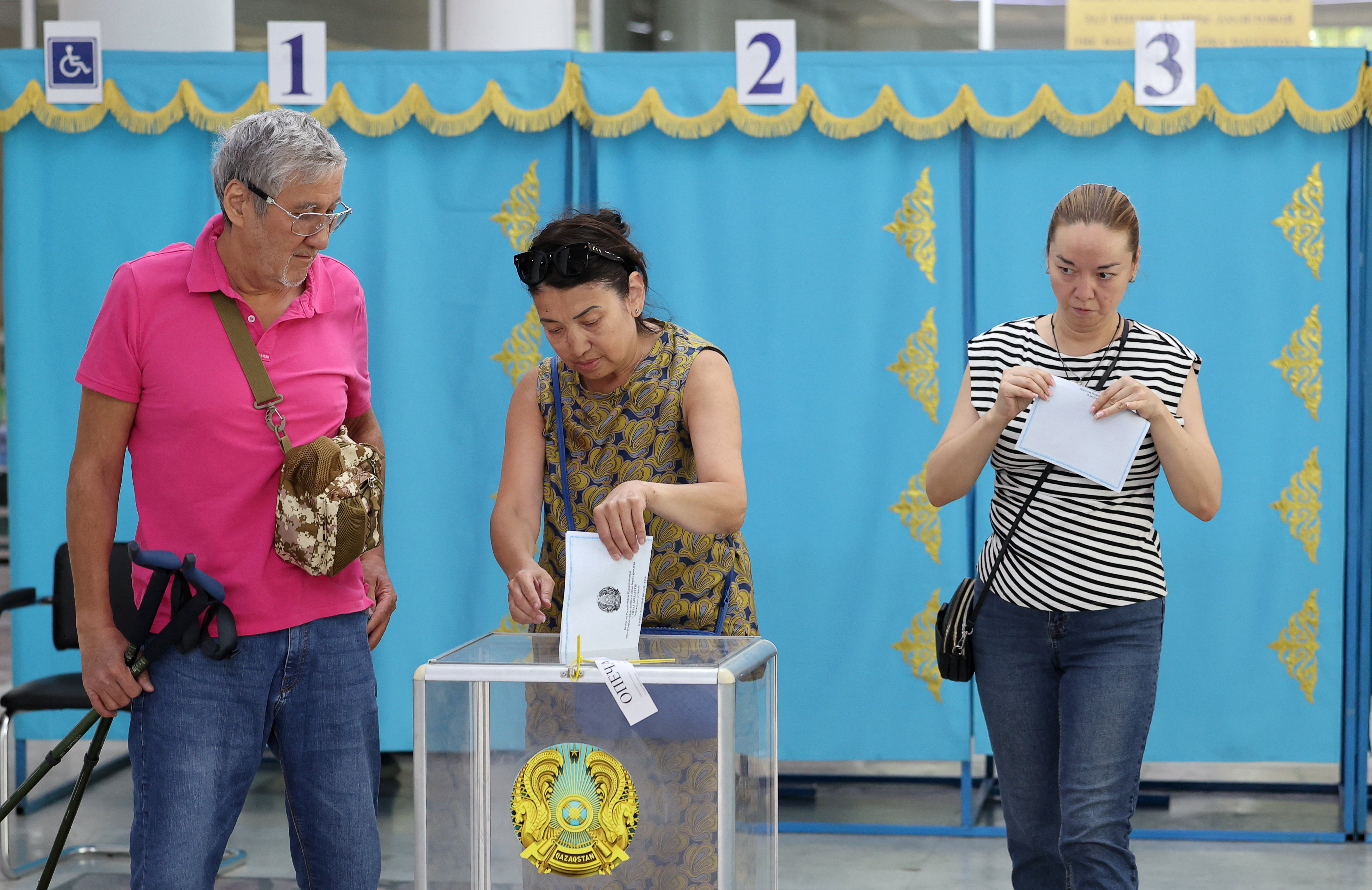
Polls have closed in Kazakhstan’s snap parliamentary elections, which are expected to further strengthen the power of President Kassym-Jomart Tokayev.
Voting concluded on Sunday at 8pm (03:00 GMT), and Central Election Commission officials began counting ballots.
Recommended Stories
list of 4 items- list 1 of 4Kazakhstan parliamentary elections begin: What’s at stake?
- list 2 of 4Ukraine’s Zelenskyy set to meet Trump as Iran and Ukraine wars converge
- list 3 of 4Kazakhstan releases first tiger to restore extinct species
- list 4 of 4Ukraine’s 40-day campaign has not brought the war closer to an end
According to the commission, 74 percent of about 12 million eligible voters cast their votes to choose a new single-chamber, 145-member parliament called the Kurultai.
The pro-Tokayev Adilet party is widely predicted to win an overwhelming majority, according to The Associated Press news agency, and several smaller parties loyal to Tokayev are also expected to enter parliament.
Sunday’s vote was the culmination of a constitutional overhaul that Tokayev initiated in March when 87 percent of voters supported a referendum to abolish Kazakhstan’s upper house in favour of a unicameral parliament.
Officials said the change would give parliament more weight in political decision-making, having previously been confined to a mostly auxiliary role. However, only seven state-approved parties, all loyal to Tokayev, have been allowed to put forth candidates.
The constitutional changes also reset term limits to allow Tokayev to run again in 2029. He has led the Central Asian country since 2019.
The 73-year-old was the chosen successor of longtime leader Nursultan Nazarbayev, who ruled for almost 30 years from the 1990s. But Tokayev broke with his predecessor amid cost-of-living protests in 2022 that led to the deaths of 238 people and has since touted a reform agenda called “Just Kazakhstan”.
The election came at a difficult economic moment for Kazakhstan as inflation hit 10.2 percent in February and tax hikes have fuelled public discontent.
The vote also took place against a backdrop of intensifying crackdowns on media freedom.
Media organisations have urged Tokayev to drop criminal charges against several journalists under house arrest and to revise legislation to ensure media freedom. Authorities have opened roughly 10 criminal cases against independent journalists and popular bloggers.
A former Soviet state, Kazakhstan balances relations with China, Europe and Russia, and Tokayev has had to navigate recent tensions over Moscow’s war with Ukraine.
Kazakhstan is oil-rich and produces about 2 percent of the world’s daily supply, mostly exporting to European countries through the Caspian Pipeline Consortium to Russia’s port of Novorossiysk.
Tokayev, who has sought to maintain a delicate balance between Moscow and the West since sanctions were imposed on Russia over the war in Ukraine, has justified the constitutional changes by citing the need for rapid decision-making in a fast-changing world.
