Firefighting helicopters collide, killing two, as Greece battles wildfires
Europe struggles with record-breaking summer heat as wildfires ravage Greece, France, and Spain, sparking mass evacuations.
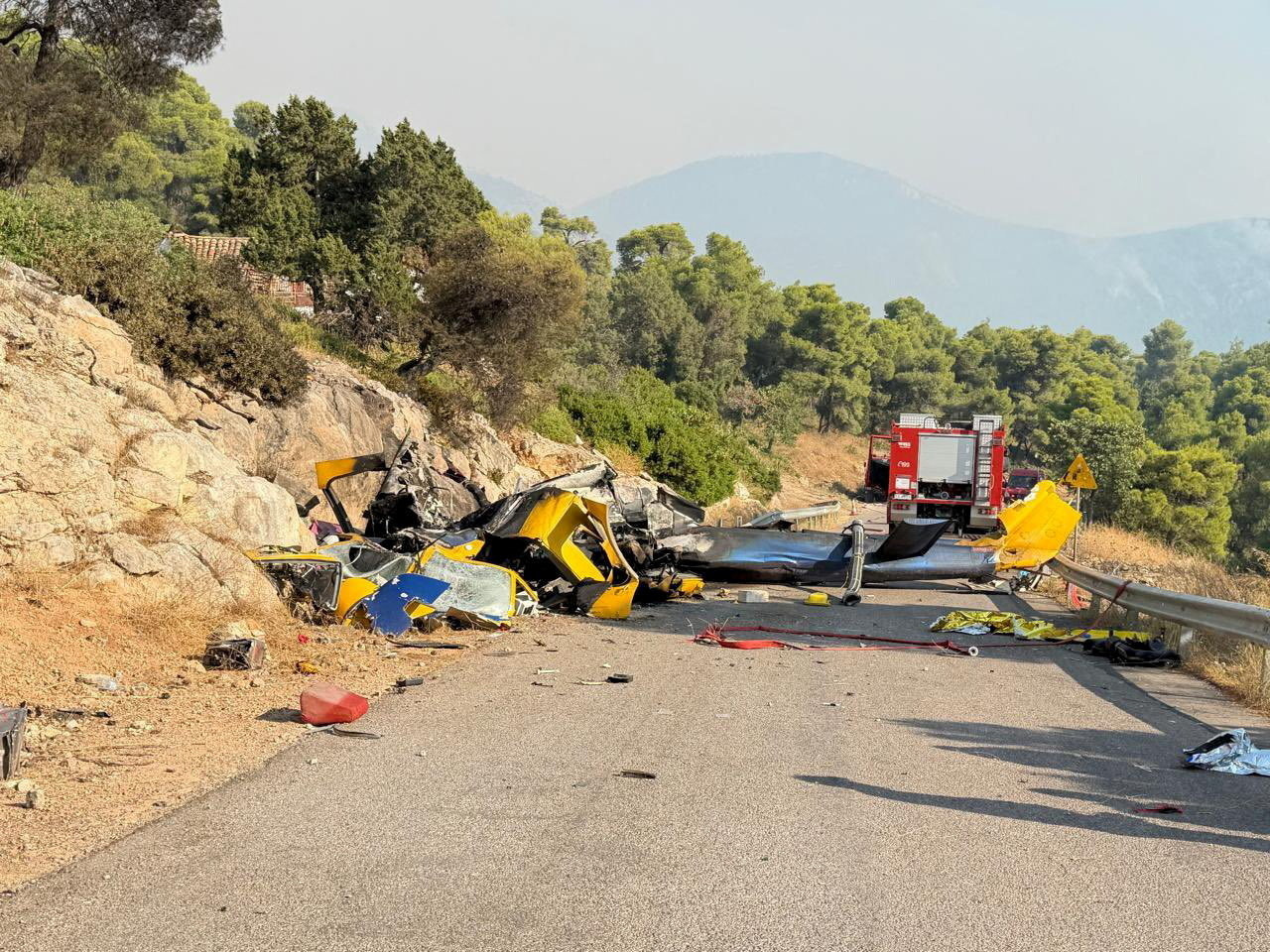
Two firefighting helicopters have collided in midair while battling a wind-driven wildfire near the Greek capital, sending one aircraft crashing to the ground and killing two people.
This comes as parts of Europe have been ravaged by wildfires this summer after a period of record-breaking heatwaves and little rain – conditions that scientists say have been exacerbated by climate change.
Recommended Stories
list of 4 items- list 1 of 4Tunisian wildfires expose failing infrastructure, community vulnerabilities
- list 2 of 4Powerful El Nino to intensify heat on ‘a planet already on fire’: UN
- list 3 of 4Hungary plans to shut down only nuclear power plant amid drought
- list 4 of 4South Korea has hottest day on record amid extreme weather globally
Four crew members were recovered after the collision in the area of Psatha, west of Athens, on Sunday, the Greek fire service said. Both crew members from one of the helicopters – a Greek and a Danish national – died in the incident, while the second crew – a British and a Greek national – were rescued alive, it added.
Television video showed one of the helicopters explode and plunge to the ground in flames after an apparent rotor collision. Investigations had started into what caused the collision, the fire service said.
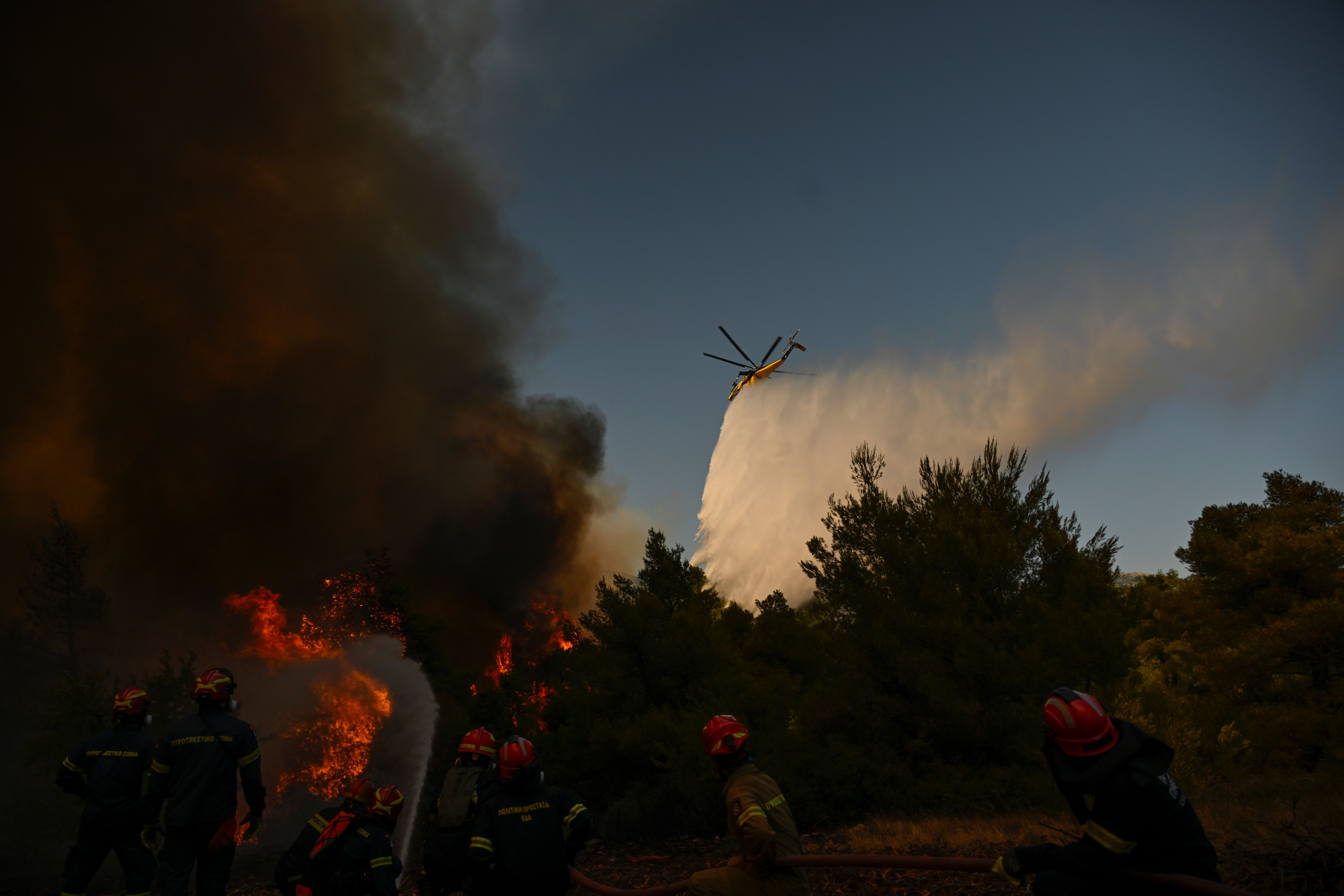
The teams were in the Psatha area battling wildfires that have destroyed more than a hundred homes and forced evacuations across Greece.
Separately, firefighters were battling to contain a blaze around Porto Germeno on the Gulf of Corinth, where flames crossed a mountain and reached a military firing range, activating unexploded ammunition.
Nearly 500 firefighters have been deployed, with reinforcements also arriving from France and Romania.

Wildfires in Greece, France, Spain
Europe has been ravaged by wildfires this summer following little rain – conditions scientists say have been exacerbated by climate change. Several new blazes have broken out in Greece after a period of relative calm there.
Gale-force winds that fuelled the Porto Germeno fire have subsided, but flames reached the settlement of Veniza and a major effort was under way to prevent the fire from reaching the nearby coastal town of Megara, the Greek daily Protothema reported.
More than 10,000 hectares (24,200 acres) of land had likely been destroyed so far, it said.
In the village of Agios Konstantinos, residents were doing their best to halt the spread of the blaze.
“The fire has been burning since last night; it is certain that they cannot have forces everywhere. We as residents are doing everything we can,” said Tasos Tzempelikos, 61, who, along with his son, was pouring water on the fire.
On the island of Kefalonia, a 44-year-old man was arrested on Sunday on suspicion of deliberately starting the fire that broke out late Saturday in the Pastra area in the island’s south, the Greek ANA news agency reported.
In France, wildfires in the Gironde and Var departments showed only minor flare-ups, with the southeastern Var blaze not spreading overnight.
In central Spain, fires that ripped through tens of thousands of hectares over the past week were mostly under control, though firefighters were dealing with re-ignitions in some areas.
In the western province of Caceres, around 800 evacuated residents were allowed to return on Sunday but remained confined to their homes as the fire stayed active.
Drying Danube
While fires in France and Spain showed signs of easing over the weekend, the blazes are part of a wider crisis gripping the continent. Hungary’s only nuclear power plant was forced to shut for the first time in four decades as water levels in the Danube River sank to a record low and a new heatwave threatened.
Hungary’s Prime Minister, Peter Magyar, warned that the country faced a critical five days because of the drying Danube, the nuclear shutdown, and water-use restrictions imposed on more than 100 cities and villages.
In Serbia, the drought that has brought the Danube to its lowest-ever level is forcing the country to greatly reduce power generation from hydroelectric plants, the energy minister said Sunday.
The two biggest plants, Djerdap I and Djerdap II, have been reduced to just 20 and 30 percent of their output capacities, Dubravka Djedovic Handanovic told RTS television.
The plants provide about 18 percent of Serbia’s electricity generation. Hydroelectric power accounts for nearly a third of the country’s energy mix, with thermal plants powering the rest.
Water levels in the Danube in Serbia have fallen to their lowest since 1985. Serbian meteorologists say there has been no significant rainfall to feed the river for the past five or six weeks.
