Munir, Rubio say ‘progress’ made in US-Iran talks, Tehran signals caution
A visit by Pakistan’s army chief to Tehran is seen as a sign of significant progress in negotiations.
Senior United States and Pakistani officials have indicated that progress is being made in talks to strike a draft deal to end the war in the Middle East, while Iran says gaps remain between the parties but that it is finalising a memorandum of understanding.
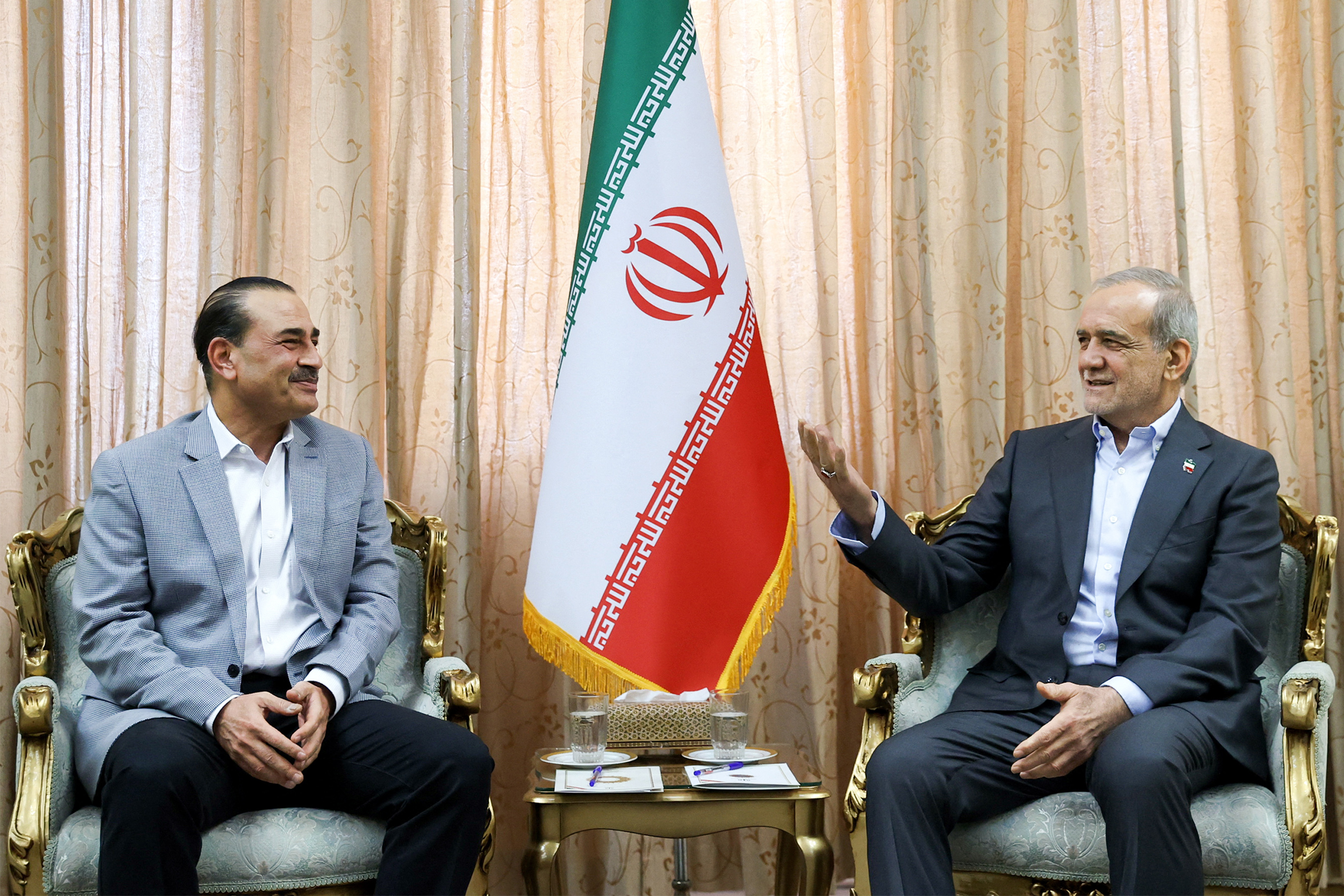
Pakistan’s army chief Asim Munir concluded a short but “highly productive” visit to Iran on Saturday, during which “encouraging progress” was made towards reaching a final understanding, Pakistan’s military said in a statement.
Recommended Stories
list of 3 items- list 1 of 3US-Iran diplomacy picks up: What’s the latest?
- list 2 of 3Pakistan’s army chief in Iran as US’s Rubio says ‘slight progress’ in talks
- list 3 of 3Are India and Pakistan quietly preparing to restart dialogue?
Munir landed in Tehran on Friday and engaged in “high-level engagements” with Iranian leadership, including Foreign Minister Abbas Araghchi. The pair “exchanged views on the latest diplomatic efforts and initiatives to prevent escalation of tensions”, according to a post on Araghchi’s Telegram channel.
This comes as Iran’s mission to the United Nations accused Washington of “excessive demands” that are pushing peace talks towards collapse amid reports that US President Donald Trump’s administration is preparing for strikes on Iran if negotiations to secure a deal fail.
Iran’s top negotiator, Parliament Speaker Mohammad Bagher Ghalibaf, told Munir during talks in Tehran on Saturday that the US was not an honest party in negotiations to end their war and Iran would not compromise on its national rights, Iranian state television reported.
Ghalibaf said Iran would pursue its “legitimate rights”, both on the battlefield and through diplomacy, but added that it could not trust “a party that has no honesty at all”, an allegation Tehran has made several times before.
Still, Iranian Ministry of Foreign Affairs spokesperson Esmaeil Baghaei said on Saturday that Tehran was in the final stages of drafting a framework for a deal to end the war with the US.
“Our approach has been to draft a 14-point memorandum of understanding that includes the most important issues necessary for ending the war and matters that are fundamental for us,” Baghaei said, reported the Iranian Fars news agency.
“Within a reasonable period of 30 to 60 days, the details of these points will be discussed, and a final agreement will ultimately be concluded,” Baghaei separately told state broadcaster IRIB.
He also said Munir’s visit did not mean “we have reached a turning point or a decisive situation”, adding that “deep and significant” disagreements remained, according to IRIB.
Late on Saturday, the Reuters news agency reported that Iran and Pakistan had submitted a revised proposal to the US to end the war and reopen the Strait of Hormuz, citing two Pakistani sources familiar with the negotiations.
‘Multifront diplomatic effort’
Trump told US broadcaster CBS on Saturday that the two sides were “getting a lot closer” to a deal, but also warned that if they do not reach an agreement “we’re going to have a situation where no country will ever be hit as hard as they’re about to be hit”.
In a separate interview with the news outlet Axios, Trump said that the chances of a deal were a “solid 50/50”.
“I think one of two things will happen: either I hit them harder than they have ever been hit, or we are going to sign a deal that is good,” he said.
US Secretary of State Marco Rubio struck an optimistic tone on Saturday, telling reporters during his visit to New Delhi, India, that “some progress” had been made in the talks, adding, “even as I speak to you now, there’s some work being done.”
“There is a chance that, whether it’s later today, tomorrow, in a couple days, we may have something to say,” Rubio said.
Iran’s ambassador to Pakistan, Reza Amiri Moghadam, said he discussed the “achievements” of US-negotiations with officials upon his return to Tehran.
“With conservative optimism, we can hope that – if the other side is adequately committed – a positive stride is taking shape,” Moghadam said.
Al Jazeera’s Tehran correspondent, Resul Serdar Atas, said, “The visit of [Field Marshal] Asim Munir, Pakistan’s chief of the army, to Tehran is itself a sign of significant progress in the negotiations.”
Atas said Araghchi had held phone calls with his Turkish, Iraqi, Qatari and Omani counterparts, as well as with UN Secretary-General Antonio Guterres, about the state of the peace talks.
“What we are seeing is a multifront diplomatic effort, moving on several tracks,” Atas said, while cautioning that a breakthrough may not be imminent.
“Munir’s arrival in Tehran does not mean a deal has been reached, and despite some progress, significant differences remain,” he said. “The parties are working to bridge those gaps.”
Hormuz ‘Iran’s biggest leverage’
Pakistan’s Prime Minister Shehbaz Sharif and Foreign Minister Ishaq Dar – who have played a crucial role in mediation between the warring sides – flew to China, Iran’s top trading partner, for a four-day visit in which efforts to resolve the ongoing crisis are expected to be discussed.
The regional war, which has affected the global economy due to the ongoing closure of the Strait of Hormuz, began with US-Israeli strikes on Iran on February 28.
Weeks of negotiations since an April 8 ceasefire – including historic face-to-face talks in Islamabad – have yet to produce a permanent resolution or fully reopen the strait, causing a worsening oil supply crisis.
The IRGC’s navy said on Saturday that at least 25 ships passed through the Strait of Hormuz over the past day, according to Iran’s semi-official Fars news agency.
“In the past 24 hours, 25 ships, including oil tankers, container ships, and other commercial vessels, passed through the Strait of Hormuz after obtaining permission with the coordination and security of the IRGC Navy,” the IRGC said in a statement.
“As of now, the Strait of Hormuz is Iran’s biggest leverage and Iranians are saying that it has been used against their national security,” Al Jazeera’s Atas said. “Even if there isn’t an agreement with the international community, Iranians are claiming de facto control over the Strait of Hormuz.”
