Who could challenge Keir Starmer for the UK PM’s job? Meet the candidates
The British prime minister has promised change as he fends off a leadership challenge.
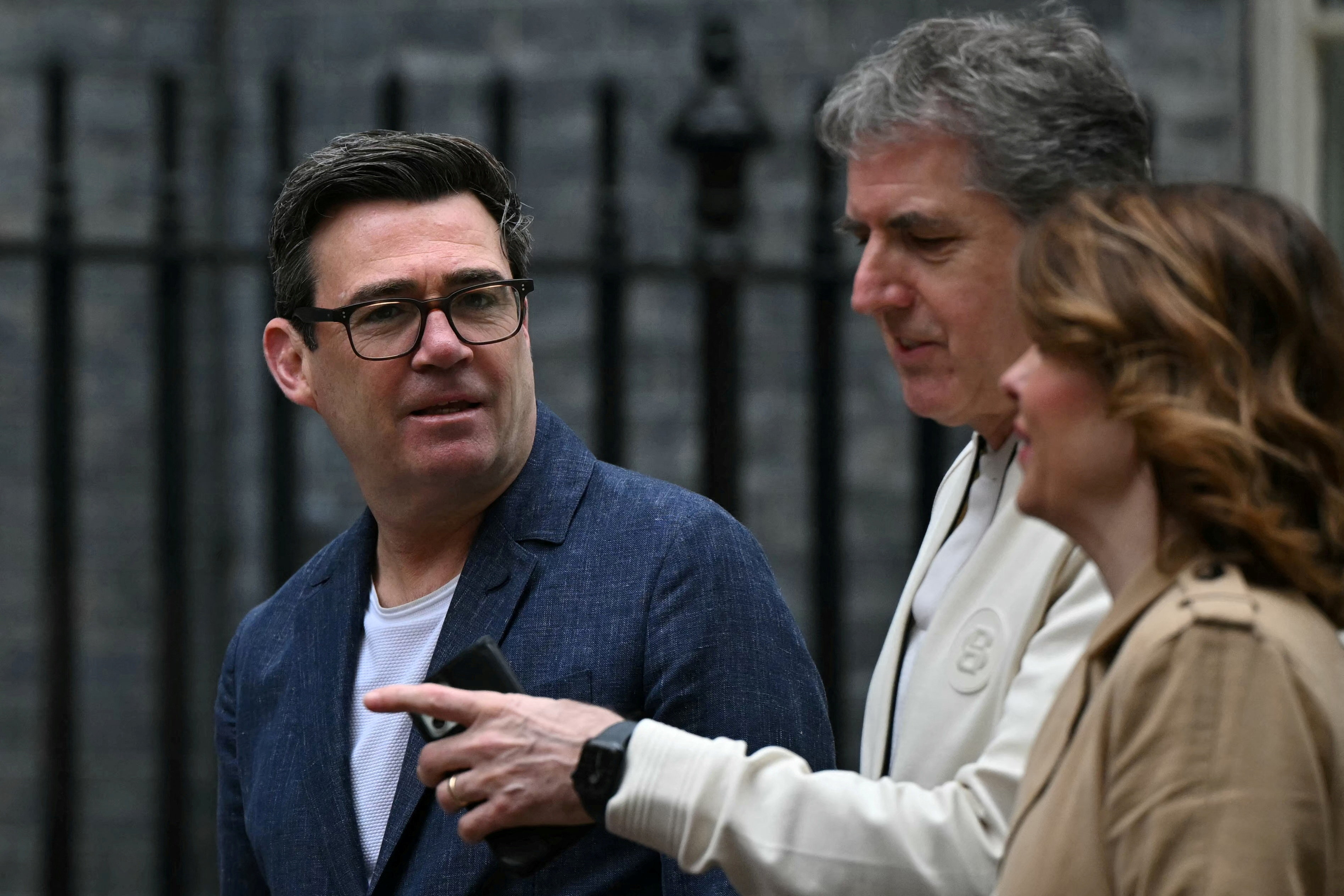


Britain’s Prime Minister Keir Starmer will face a major challenge to his premiership following disastrous local election results last week and calls from nearly 100 of his own MPs for his departure, but he may have been handed a reprieve – at least temporarily.
Health Secretary Wes Streeting was one favourite for the challenge, having reportedly secured the backing of more than 81 MPs – the minimum 20 percent of Labour MPs required to mount a leadership challenge. However, while he resigned from government on Thursday over the election results, he has not yet launched an official bid for the leadership as was widely expected.
Recommended Stories
list of 3 items- list 1 of 3UK elections – early results and takeaways; will Starmer have to resign?
- list 2 of 3UK’s Labour set for heavy losses in elections as Reform makes early gains
- list 3 of 3‘Leader of the pack’: Reform UK makes huge election gains in blow to Labour
That’s likely because he is waiting for another challenger to enter the fray, in order to make his own bid more credible, observers say. That man is expected to be Manchester Mayor Andy Burnham, who currently cannot stand for leadership as he is not an MP.
On Thursday, Josh Simons, 32, Labour MP for Makerfield, announced that he would step aside to allow Burnham to return to Parliament. He told BBC Radio Manchester that the Labour Party was “imploding” and that this was “too big an opportunity to miss” to get the party back on track.
Burnham will still need to stand as a candidate in a by-election for Makerfield following Simons’ resignation, but it is one of Labour’s safer seats in England.
All this means that no leadership challenge can be mounted before September – the earliest opportunity for a by-election.
Labour came to power in July 2024 in a landslide victory, following 14 years of Conservative Party rule. Since then, Starmer’s popularity has tanked while support for the anti-immigration party, Reform UK, led by Brexit figurehead Nigel Farage, has soared. In local elections last week, Labour lost more than 1,460 council seats in England – most of them won by Reform – in the worst election results suffered by a governing party in more than 30 years.
So who are the main potential challengers to Starmer’s premiership? Here’s what we know.
Why is pressure on Starmer mounting now?
Discontent with Starmer’s leadership has been increasing over the past year. That could be seen clearly last week in the heavy losses in English local elections and parliamentary votes in Scotland and Wales.
While Labour lost nearly 1,500 local council seats, Reform UK surged from fewer than 100 to about 1,450 seats.
Support for Labour evaporated, even in several of its traditional strongholds in London, in former so-called “Red Wall” industrial regions in central and northern England, and in Wales, mainly benefitting Farage’s populist party.
One major issue is what many voters view as Starmer’s failure to tackle immigration. Despite agreeing on a “one-in-one-out” deal with France last year to return undocumented migrants in return for those with a clear link to the United Kingdom, only a few have been successfully sent back.
There has also been mounting pressure over Labour’s appointment of Peter Mandelson as ambassador to the US in December 2024. He was sacked after embarrassing emails between him and Jeffrey Epstein were uncovered by the British media last September. Since then, Mandelson has been accused of sharing sensitive financial market information with Epstein in the wake of the global financial crisis in 2006-2007. Starmer has been accused of failing to heed warnings not to appoint him as ambassador, despite knowing of his connections to the convicted sex offender.
Starmer has publicly apologised, but said he did not know how close their relationship was. “None of us knew the depth and the darkness of that relationship,” Starmer said earlier this year.
Starmer has one of the lowest approval ratings for a Western leader. The latest Ipsos Political Pulse opinion poll suggests half of Britain’s electorate believes Starmer should step down, and two-thirds believe he is unlikely to win re-election. The next general election must be held by July 2029 – five years after the previous one.
Tim Bale, professor of politics at Queen Mary University of London, said local elections only confirmed what the public already knew and Labour Party members feared. “Namely, [that] the government is terribly unpopular and Starmer is even more unpopular than the government,” he said.

Who could Starmer’s main challengers be?
To trigger a leadership contest, more than 20 percent of Labour MPs – 81 of them – must support a new candidate.
“That’s a pretty low bar when there is so much discontent in the PLP [Parliamentary Labour Party],” Bale said.
Among the potential challengers are:
Andy Burnham
Greater Manchester Mayor Andy Burnham, 56, who ranks in opinion polls as the public’s preferred choice, is currently unable to challenge as he does not have a seat in parliament – he will need to win a by-election before he can enter the fray.
As mayor of Manchester, he has proved highly popular and has been elected three times with successive landslides. He identifies as a socialist and is seen as being on the “soft left” of the party.
YouGov polling indicates that 34 percent of Britons think he would be a better prime minister than Starmer.
Following the announcement by Simons that he will stand down from his parliamentary seat in Makerfield, Greater Manchester and Merseyside in northern England, Burnham can stand for Parliament there.
Makerfield has traditionally been a safe Labour seat, but popularity for the right-wing, anti-immigration party, Reform UK, has grown significantly there. It is now the second party in that seat.
Burnham nearly had the chance to return to Parliament earlier this year when Labour MP Andrew Gwynne resigned as MP for Gorton and Denton on the grounds of “significant ill health”. However, as mayor of Manchester, Burnham was required to seek the approval of Labour’s National Executive Committee (NEC), which blocked it.
Eight NEC officers – including Starmer himself and Home Secretary Shabana Mahmood – voted against allowing him to stand. Only one officer – Deputy Party Leader Lucy Powell – voted in favour.
Many Labour MPs believe this was a huge mistake as the seat was ultimately lost to the Green Party despite being seen as “safe”. Starmer is understood to have said he will not bar Burnham from standing in Makerfield this time around.
In a statement, Burnham said: “I truly do not take a single vote for granted and will work hard to regain the trust of people in the Makerfield constituency, many of whom have long supported our party but lost faith in recent times.
“We will change Labour for the better and make it a party you can believe in again.”
In order for the election in Makerfield to take place, there is a process which must be followed in the House of Commons. First, the Labour Chief Whip formally asks Parliament to start the election process. After this, the election must take place between 21 and 27 days later – usually on a Thursday.
Last year, Burnham was repeatedly touted as a contender for the leadership and notably never publicly ruled it out.
Wes Streeting
Bale said Health Secretary Wes Streeting, 43, who has traditionally been seen as being at the centre-right of the party but has taken a left-wing stance on some issues such as Gaza and welfare, is also a likely contender, as many MPs rate him as a good communicator. It is thought he has already secured the required 20 percent of Labour MPs to support a bid, UK media have reported.
Streeting’s allies have pointed to election results in Redbridge, the local authority in his constituency, where Labour held on last week, as a favourable sign for a possible leadership challenge. However, he has in the past lost support because of his previous friendship with Mandelson, the UK’s Guardian newspaper reported on Monday.
Rayner or Streeting may be most likely to kick off a leadership contest, but neither is universally popular within Labour itself, say observers.
Angela Rayner
Starmer’s former deputy prime minister, the left-leaning trade unionist Angela Rayner, has been touted as one of the most credible challengers, although she has not officially put herself forward. Rayner was the housing secretary but was forced to resign last year for breaking the ministerial code on her taxes. This week she was cleared of wrongdoing and repaid 40,000 pounds ($53,420) in unpaid stamp duty.
She has said blocking Burnham’s return to parliament was a mistake, suggesting that she may back him in a leadership contest.
“What we are doing isn’t working, and it needs to change. It’s no good acknowledging mistakes if they’re not put right,” Rayner said on Monday after Starmer’s speech.
Bale said Rayner would likely garner consensus within the party.
“[The] left-leaning Labour MPs feel that Starmer’s leaned too far right and the government needs a course-correction,” he told Al Jazeera.
Ed Miliband
Allies of the Energy Secretary and former Labour leader have privately told UK media this week that Miliband has enough support from MPs to mount a challenge should he choose to do so.
It is thought he may only do this if there is no other challenger to contest Streeting, according to reports in the UK political press.
Miliband, 56, has not openly commented and, in November last year, even ruled out the idea of standing for the leadership again.
He has also been rejected by the electorate before. He led the party from 2010 to 2015 but roundly lost the general election to David Cameron’s Conservative Party in 2015.
