Iraq orders takeover of oilfields in areas under Kurdish control
PM Ali al-Zaidi also orders his government to seize all crossings in the Kurdish region after an oil smuggling inquiry.
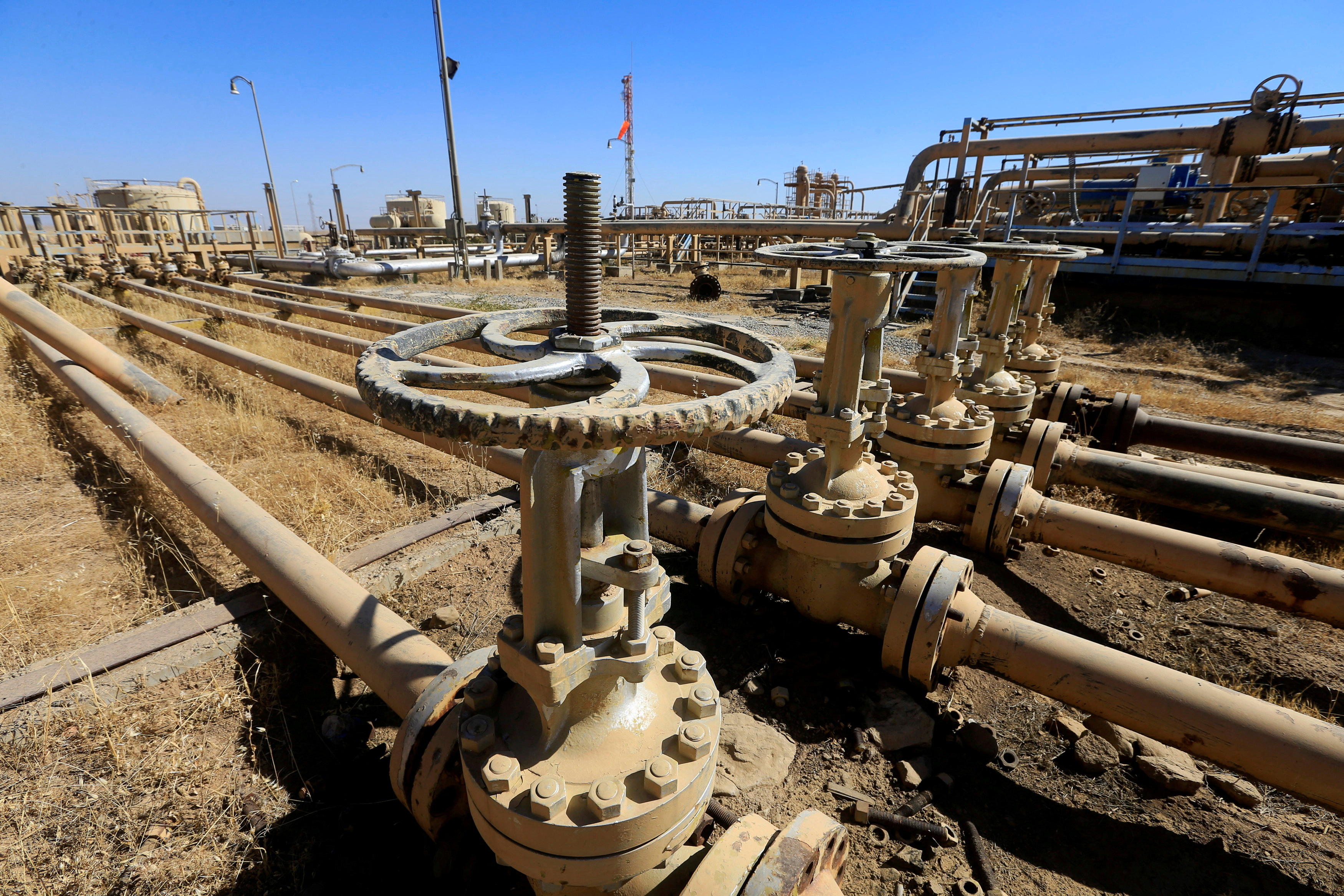
Iraq’s Prime Minister Ali al-Zaidi has ordered the federal Ministry of Oil to manage oilfields in areas under Kurdish security control, potentially deepening tensions between Baghdad and the semi-autonomous region in the north of the country.
The prime minister’s order covers oilfields in Diyala, Kirkuk, Salahuddin and Nineveh provinces, according to a statement from his office on Tuesday.
Recommended Stories
list of 4 items- list 1 of 4What is Iraq’s Jurf al-Sakhar and what is behind gov’t push to control it?
- list 2 of 4What next for Iraq’s push against militias following Jurf al-Sakhar deal?
- list 3 of 4Iraq reaches compromise with Kataib Hezbollah over armed group’s stronghold
- list 4 of 4Iraqi forces deploy to Jurf al-Sakhar after deal with Iran-backed group
It said Baghdad would “secure and monitor all oilfields with cameras, including fields within the administrative boundaries of the federal government that are under the security authority of the regional government”.
Al-Zaidi also ordered the border crossings authority to take over all crossings in the Kurdish region and directed the regional government to approve exports of crude oil and petroleum products only through the federal Oil Ministry.
“The Border Forces Command shall close unofficial crossings along the international borders with neighbouring countries, including crossings in the Kurdistan Region of Iraq,” the statement said, adding that “all seasonal roads” between the four governorates and the Kurdish region would be closed.
Masoud Barzani, the president of the Kurdistan Democratic Party (KDP) and the former president of the Kurdistan region of Iraq, called the decision “troubling”.
In his view, it was another attempt at undermining “the principles of federalism and the Iraqi constitution, disregard the rights of the people of Kurdistan, and advance reckless and ill-considered proposals”, according to a statement citing him by the KDP foreign relations office.
“From the outset, we expressed our support for Prime Minister Ali Zaidi and his efforts to resolve outstanding problems. We have also supported the fight against corruption and taken practical steps toward that end,” Barzani said.
“Yet the region now faces a misleading and unjust campaign, with unfounded accusations published against it daily.”
The KDP leader said that his party is ready to cooperate with the government in preventing illegal activities and smuggling, “but this must be done through legal and constitutional channels”.
Al Jazeera’s Mahmoud Abdelwahed, reporting from Baghdad, said the latest development might exacerbate tensions and disputes over control of oil and the sharing of budgetary resources between the national government and the autonomous regional government.
“The federal government is keen to keep all excavation and marketing of oil under its state organisation, SOMO, but this has been totally rejected by the Kurdish region,” he said.
A dispute over Kurdish authorities selling oil without Baghdad’s approval halted pipeline shipments to Turkiye for more than two years before the sides agreed in September 2025 to restart them.
Al-Zaidi, meanwhile, removed the head of the border crossings authority and suspended North Oil Company’s director general and his deputies pending further investigation, Iraq’s state news agency reported.
In a separate case, Iraqi officials accused Kataib Hezbollah, an armed group backed by Iran, of running an oil smuggling network in its stronghold of Jurf al-Sakhar, south of Baghdad.
The group denied the accusation.
