Musk pledges $10bn in SpaceX shares for US children: Who really gains?
The pledge, which Trump says will go through accounts with his name, comes two weeks before the US midterms.
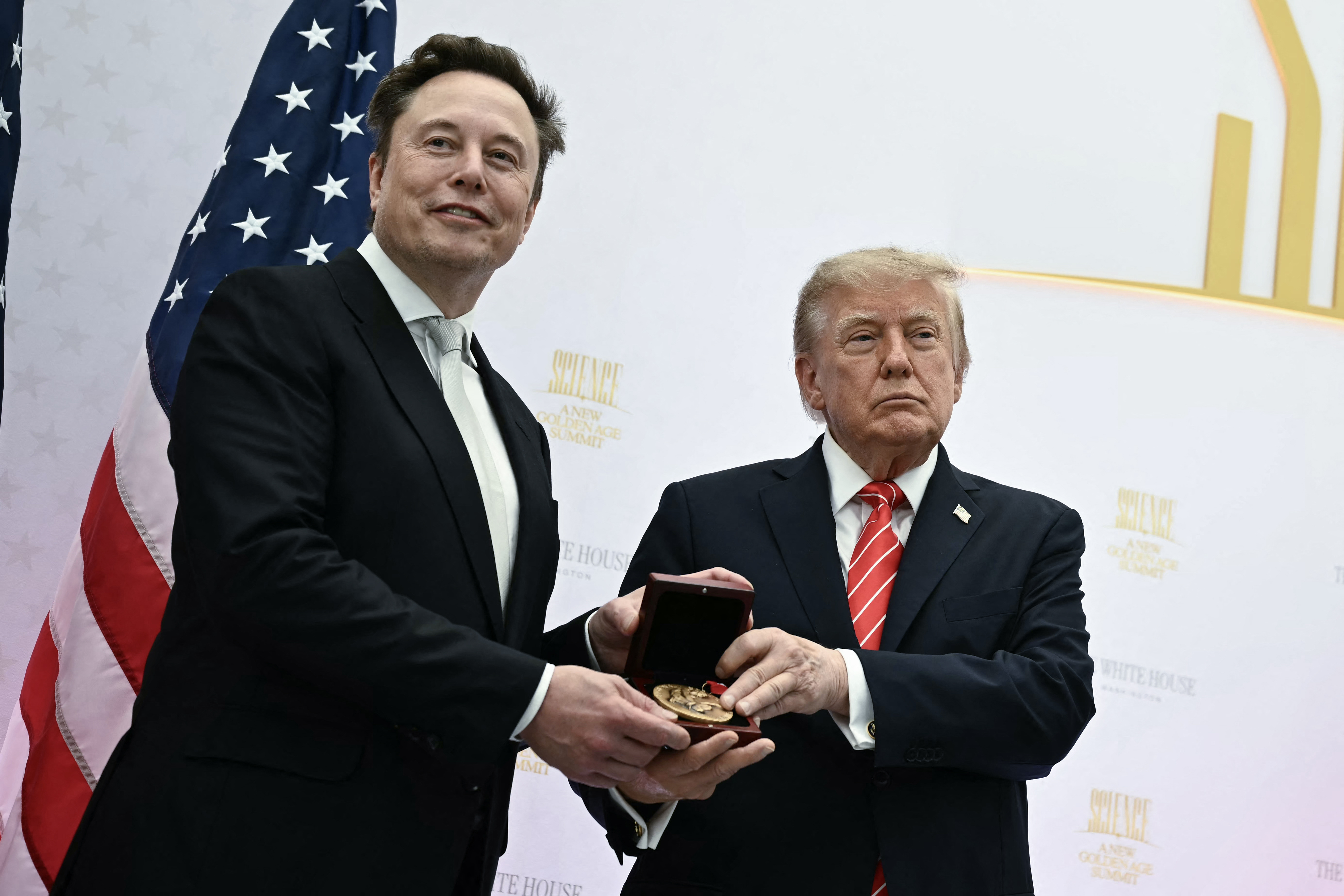

Elon Musk has pledged to give one SpaceX share to every child in the United States next year – a gift that could be worth more than $10bn.
“This will be the first of many,” the world’s richest man wrote on X on Monday.
About 73 million children under 18 live in the US, according to US Census Bureau data.
At Friday’s closing price of $146.03, the pledge would be worth about $10.7bn.
President Donald Trump thanked Musk on his Truth Social platform, and claimed the shares would be given to children “through TRUMP ACCOUNTS”, the tax-friendly investment accounts for children created under his signature tax and spending law last year.
The pledge comes two weeks before the November 3 midterm elections.
Musk is the biggest known donor in the run-up to those elections, having given more than $276m to Republican groups since July.
Musk has not said which children will qualify, when the shares will be handed over, or how.
So how might the giveaway work, and who stands to gain?
Here’s what you need to know:
How much is a SpaceX share worth, and how much is Musk giving away?
SpaceX, the world’s seventh-largest company, began trading on the Nasdaq in June at an initial public offering price of $135 per share.
That price has been volatile. SpaceX shares have fallen 35.3 percent since peaking days after the listing.
The shares are currently trading at around $146 a share. Every $1 move in the share price will change the gift’s value by about $73m.
Musk owns 4.8 billion shares in SpaceX outright, according to a filing with the US Securities and Exchange Commission (SEC) in August.
Including unvested awards and stock options, his stake rises to about 6.4 billion shares, or 48.4 percent of the company.
Giving away 73 million shares would reduce his outright holding by about 1.5 percent, barely affecting his control of the company. That’s because his voting power, which is currently about 82 percent because SpaceX has two classes of shares, would fall by only 0.1 percentage points, according to a Bloomberg Opinion calculation.
It would be the largest single gift linked to Trump accounts so far.
How would the shares reach children?
Musk has not said.
Trump said the shares would be held in Trump accounts, and Musk thanked Brad Gerstner, the tech investor behind the accounts, for “helping enable this”.
Nearly 70 million Trump accounts have been opened, one for every child under 18 with a Social Security number, according to the White House. Investments held in Trump accounts can roll up with tax deferred until they are withdrawn when a child turns 18. Alternatively, they can be rolled into a tax-friendly IRA – a retirement account for adults – and continue with the tax-friendly status.
Under Treasury rules published on September 30, donors can now gift individual company stock to children via the accounts. Families and friends making regular contributions to a child’s Trump account are limited to investing low-risk index funds.
Families cannot refuse the shares on behalf of their children and generally cannot sell them for five years, or until the end of the year the child turns 17 if that comes sooner.
Musk cannot sell or trade most of his SpaceX shares until June 2027, the Wall Street Journal reported.
Who gains?
The accounts carry the president’s name, and Trump has tied himself closely to the gift.
He thanked Musk on Truth Social, saying the pledge was “exactly what was envisioned when we created TRUMP ACCOUNTS”.
The White House has presented the accounts as a signature achievement of Trump’s tax law, noting that “every single Democrat voted against” the legislation.
The pledge also marks a public reconciliation. Musk and Trump fell out in 2025 over Trump’s tax-and-spending bill, a rift Trump later called a “little dispute”.
Children will be gaining a share for free, but the gift could also save Musk money.
Donors who give appreciated stock to charity avoid capital gains tax and can usually claim a deduction, the US broadcaster CNBC reported.
As SpaceX’s founder, Musk paid very little for his shares, and selling $10.7bn of them could mean a tax bill of up to about $2.5bn.
It is “a popular practice for particularly high-income taxpayers that would otherwise be paying a high rate”, Will McBride, chief economist at the Tax Foundation, told the broadcaster in May.
Ann Lipton, a law professor at the University of Colorado Boulder, told Inc. magazine that millions of shareholders unable to sell would also have an interest in SpaceX’s success and in “minimising its regulatory burdens”.
For Mitchell Downey, an economist at Stockholm University’s Institute for International Economic Studies who studies political influence in the US, the more striking part of the pledge is what he called “the horseshoe aspect of this” – the idea that right-wing and left-wing policies can curve around and meet.
For decades, progressives have backed the concept of Child Development Accounts, investment accounts for every newborn designed to reduce inequality in wealth, he said. The idea was associated with groups such as the Democracy Collaborative but struggled to gain federal support. Now the idea may become more mainstream as a result of Musk’s gift and Trump accounts.
“It always felt like it might be out of reach,” Downey said. “But I don’t see how Musk’s proposal would be possible without building some infrastructure like this.”
Why is the timing important?
The pledge comes just two weeks before the November 3 midterm elections, which will decide control of the two houses of Congress. All seats in the House of Representatives and one-third of the Senate are up for re-election.
Trump’s approval rating has meanwhile fallen to a record low of 33 percent, according to a Washington Post-ABC News-Ipsos poll, with many political observers expecting to see the Republicans lose seats to the Democratic Party as a result.
Musk, who campaigned with Trump in 2024 and spearheaded the president’s Department of Government Efficiency initiative to reduce the size of the federal workforce, has contributed heavily to Republican candidates in advance of the midterm elections.

Is this legal, and why is it controversial?
Downey said he does not believe the pledge raises legal concerns.
“Individuals are allowed to spend their money in support of a politician,” he told Al Jazeera. “The law only gets violated when either it isn’t publicly reported, or it is part of an explicit and documented quid-pro-quo.”
But he said it does raise ethical concerns, though not ones unique to Musk’s approach.
Those concerns relate to “the outsized role that external donors play in US elections”, Downey said. In his view, they apply much like when someone spends heavily on television advertisements for a candidate.
Has anyone done this before?
Downey said the precedent was “hard to assess”.
Because Musk is the richest person in modern history, he said, it is perhaps unsurprising that he is “doing something that involves more money than other very rich people have done”.
He pointed to the Gates Foundation’s spending over the past three decades as “a different type of ‘gift to the public’”. The difference, he said, is that the Gates Foundation focuses funding on health crises in countries in Africa and South Asia – not on voters in the US.
Last year, Gates pledged to “give away virtually all my wealth through the Gates Foundation over the next 20 years to the cause of saving and improving lives around the world”.
