Alberta rejects separation referendum: What’s next for Canadian province?
Calls for independence intensified last year, with some 300,000 petitioning officials for a referendum.
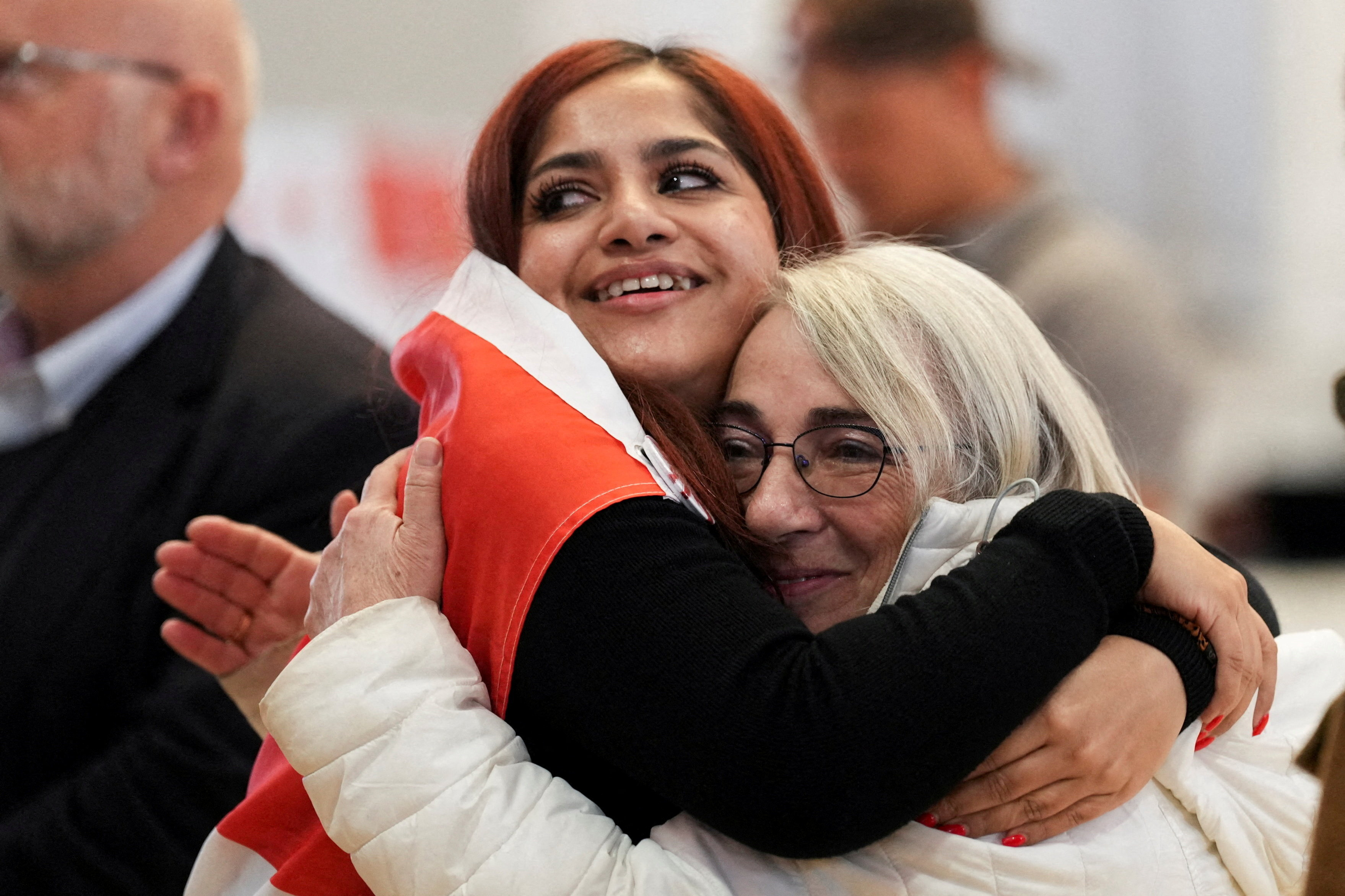

Voters in Alberta have chosen to remain part of Canada in a first-ever independence referendum.
Canadian broadcasters projected a decisive victory for the “remain” side, with 76 percent opting to stay in Canada and 24 percent supporting a future referendum on independence, according to preliminary results.
The result marks a major win for Prime Minister Mark Carney, who is facing a trade and political war with the United States amid US President Donald Trump’s higher tariffs and repeated suggestions of annexing the country.
On his way into a cabinet meeting on Tuesday morning, Carney called it a “great day”.
“I’m thrilled that Albertans have chosen unity. They’ve chosen to build together. They’ve chosen to continue to take care of each other, to move forward together with purpose,” he said.
But the result also disappoints those Albertans seeking independence for the resource-rich region after years of grievances laid at Ottawa’s door.
And while the vote represents a decisive rejection of separation, it may not spell the end for a movement that has spent decades pushing for greater autonomy from the federal government.
Here’s what we know:

What was the referendum about?
The nonbinding referendum was first announced in May following a campaign and petition by a group of Albertans who want to be an independent country.
While only about one-third of Albertans were found to be pro-independence in polls, Alberta Premier Danielle Smith argued in her announcement that a referendum was necessary to respect the 300,000 Albertans who had petitioned officials for it.
Voters answered 10 questions, including whether the government should begin a binding process to seek independence from Canada. They also answered questions on immigration, access to provincial services like education, social care and healthcare, and voter identification requirements.
But even if voters had chosen to pursue independence, Alberta would not have automatically separated from Canada. A win for the independence side in a subsequent referendum would have set the stage for complex negotiations between Alberta, the federal government, the other provinces and Indigenous peoples.
Prime Minister Carney had campaigned for Albertans to vote “remain”, saying last week at a rally in Calgary that separation would be “a dangerous bluff that will lead to years of deep division”.
“There are some outside our borders who are working to break us so they can own us,” he said.
Researchers have pointed to possible online influence campaigns by both Russian and US entities that helped amplify the call for separation and allegedly shared misleading information. Alberta Premier Smith told the media in August that the online activity was under observation.
What have the reactions been?
In a statement on Tuesday, Carney, who grew up in Alberta, said voters had made a “clear choice” in favour of unity, adding that “Canada is greater than the sum of its parts”.
“Now it is our opportunity to take all that we have been given as Canadians – and we have been given the greatest country in the world – and make our country better for all of us,” he said.
Smith said she was pleased to see the results and that “Albertans have voted for a stronger Alberta in a united Canada”.
While Smith opposed independence, her decision to hold the referendum gave separatists an opportunity to put their cause in front of voters across the province.
Smith had encouraged voters to vote in favour of the nine other questions on the ballot, which touched on issues like immigration and judicial appointments. Preliminary results showed voters had chosen to support eight of nine of those measures.
The rejection of separation could now allow her government to shift its focus back to demands on those issues and its broader push for greater autonomy for Alberta within Canada.
But separatist leaders made clear they had no intention of abandoning their cause.
At a gathering to watch the results in Edmonton, Jeffrey Rath, a leader of the Alberta Prosperity Project, told reporters the push for independence would “absolutely continue”.
“We’ve been educating Albertans on the benefits of independence, and we’re continuing to move forward.”
First Nations groups turned out in strong numbers to vote to remain with Canada, with one southern Alberta polling station in an area home to the Siksika Nation temporarily running out of ballots, local media reported.
Why is Alberta important, and why are there calls for independence?
Alberta, home to 5.1 million people and some of the world’s largest oil reserves, has long had a contentious relationship with Canada’s federal government.
Supporters of independence argue the province could be wealthier and have greater control of its future if it broke away from Canada.
Much of their frustration centres on the belief that Alberta gives more to the federal government than it gets in return, as well as restrictions on oil and gas development that separatists argue have hurt Alberta’s economy.
They argue independence would let Albertans benefit more from their province’s natural resources, make their own decisions on energy development and have more control over issues like immigration and taxes.
But critics, including Carney, say Alberta’s grievances can be addressed within Canada and that independence would create economic turmoil. At a rally in Calgary last week, Carney said separation would mean “years of deep uncertainty and lost opportunities”.
Since coming into office, he has tried to improve relations with Alberta, pointing to plans for a new pipeline to help the province export more of its energy resources overseas, as well as major infrastructure projects in the province.
Is it over for Alberta’s independence bid?
With separatism agitations running so far back, experts say the referendum will likely not end the movement altogether.
Ahead of the vote, some separatist leaders said they would pursue another referendum if necessary, arguing that the referendum shows that independence is legally possible.
Cory Morgan, founder of the advocacy group Pathway to Independence, said the result did not mean the end of the movement.
“A great base of support for independence has been fostered which isn’t going away,” he wrote on X, calling on supporters to continue working towards separation.
Albertans more broadly seem to agree that the movement isn’t going away. An October 16 poll by Angus Reid found 62 percent believe “there will never be an end to the separatist movement” in the province.
But there is also little desire in the province for another referendum — the same poll found 69 percent opposed holding another if this one failed, and Premier Smith has also said she would not hold another vote while she is in office.
But Morgan of Pathway to Independence told Al Jazeera ahead of the vote that rather than abandon the cause, a defeat would force the movement to rethink its approach.
“We’d have to regroup then and accept why we didn’t effectively make our case to the majority of Albertans,” he said.
“I would respect the will of the voters,” he said. “If they’ve decided it’s not time to go that route yet, then so be it. But that doesn’t mean I’ll stop.”
