Burning rubbish chokes besieged Yemeni city of Taiz
Taiz residents face health risks as waste accumulates amid sniper fire, forcing people to burn it in the streets.
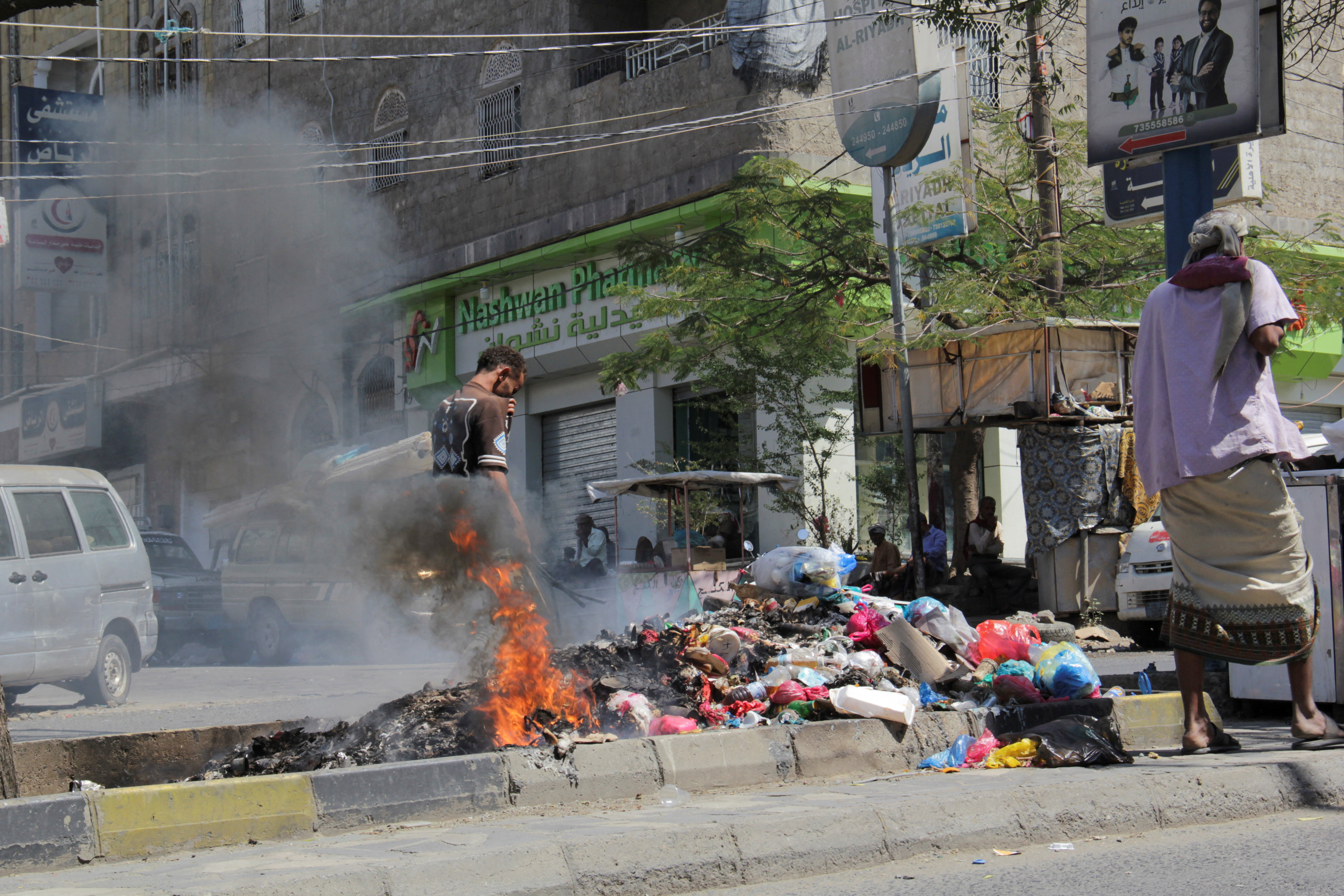
Taiz, Yemen — Black smoke from burning rubbish envelops the Usaifira area north of the Yemeni city of Taiz, while foul odours fill the air in surrounding residential neighbourhoods.
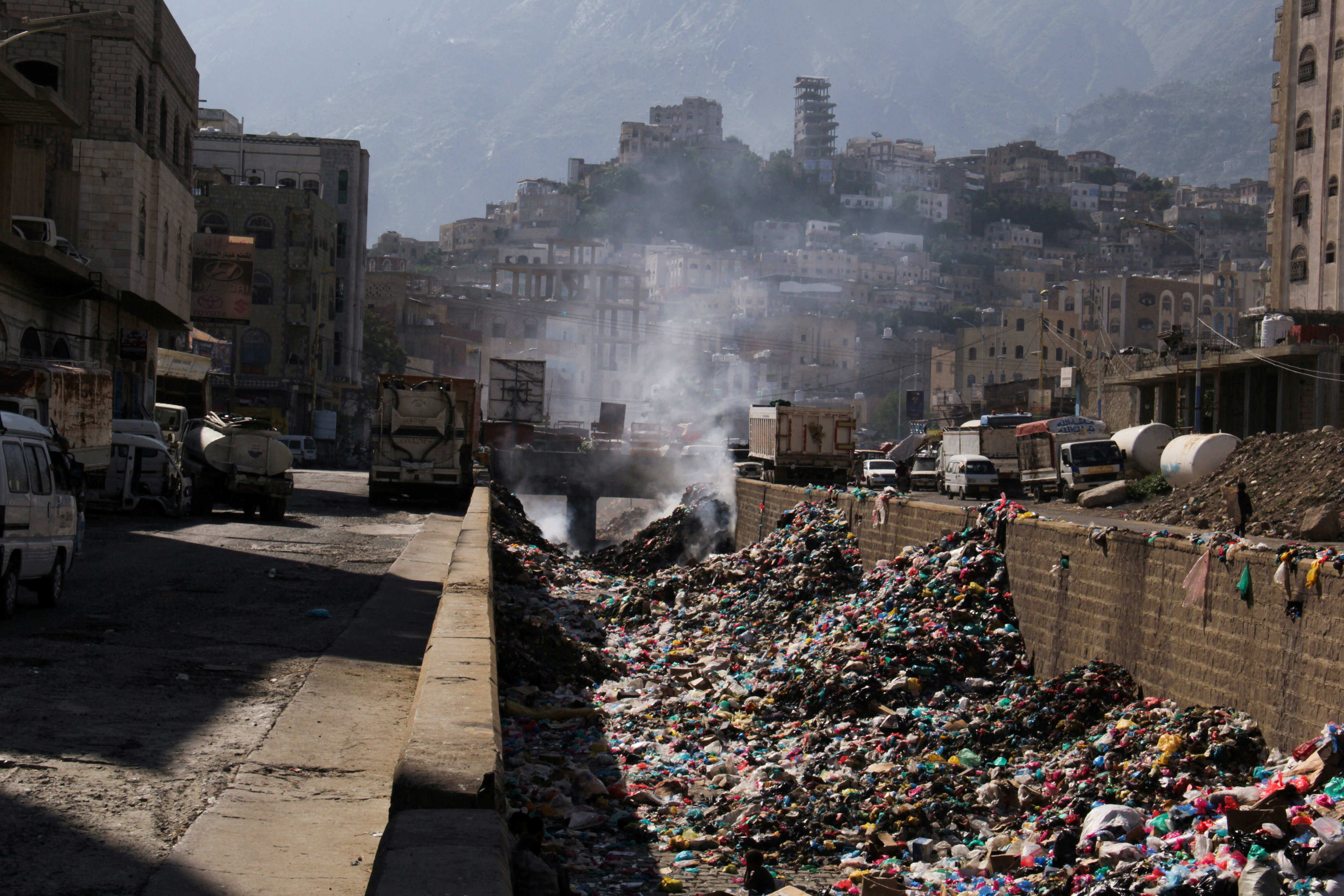
Along a waterway known as the al-Saeed stream, bags of uncollected household waste pile up – a scene that has become part of daily life for residents. They find themselves trapped between mounds of rubbish and smoke, in a crisis that not only reflects a breakdown in public services but poses a direct threat to their health and environmental safety.
Since early October, the city has seen a buildup of waste, with sanitation trucks unable to reach the main landfill site in the western part of the city controlled by Iranian-backed Houthi forces, who have laid siege to the city for a month, affecting hundreds of thousands of people. Fighting has escalated since October 5, when forces of the internationally recognised government — backed by a Saudi-led military coalition — launched a major military offensive aimed at taking back all areas of the country under Houthi control.
Sanitation workers in Taiz say that snipers have been deployed in the vicinity of the landfill, and that staff have faced gunfire more than once while trying to reach the site to empty their trucks, preventing waste disposal operations.
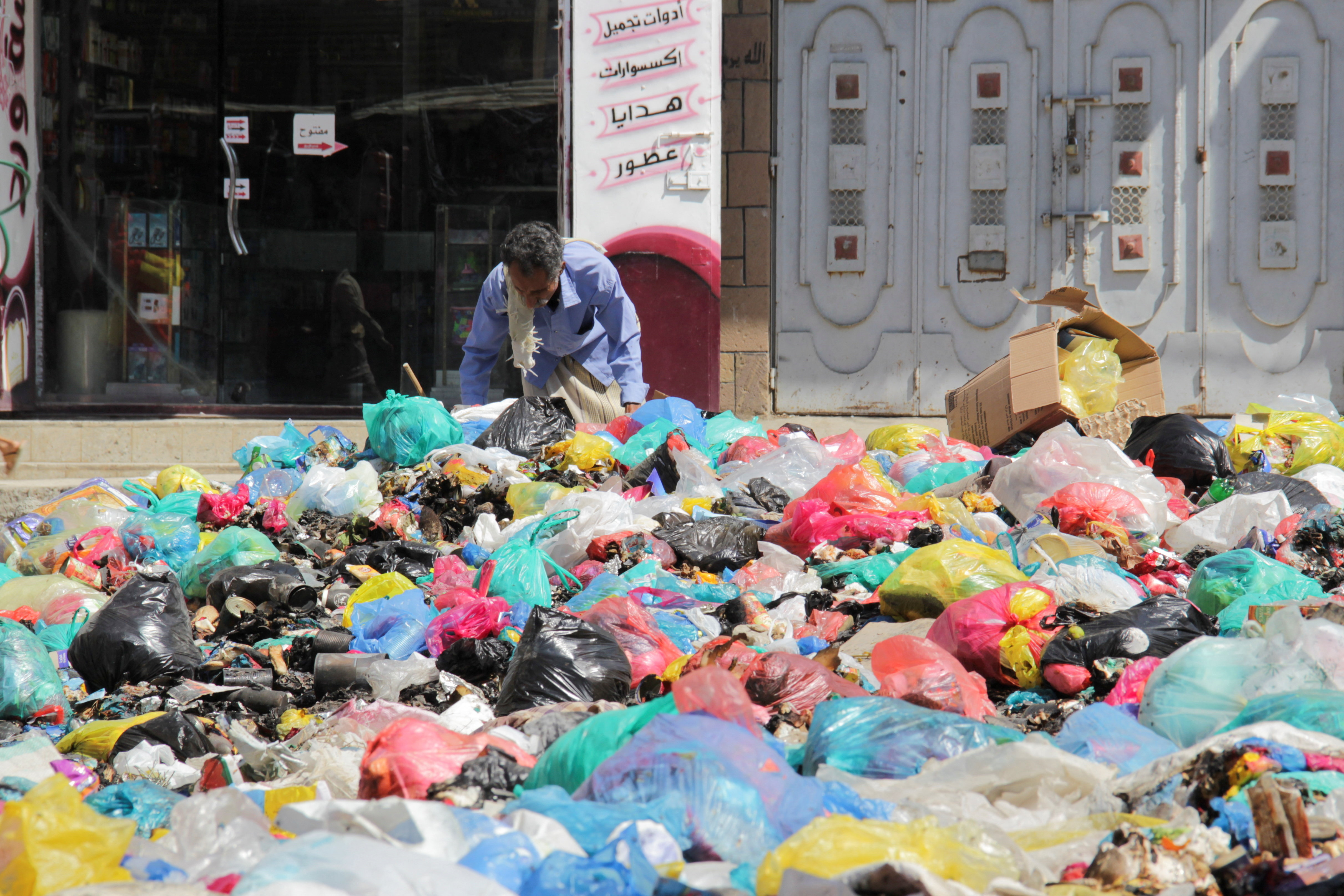
The disruption comes as the city suffers from an acute shortage of fuel, which has further hampered waste collection. As a result, rubbish has accumulated on streets and in storm drains, prompting desperate residents to set the waste on fire.
The tide of rubbish extends into the stream from the middle of lower Tahrir Street down to the Usaifira area, in the middle of neighbourhoods where residents are exposed to toxic fumes every day.
Toxic health threats
Rather than a collection point, the al-Saeed stream has become a smoke-filled dumping ground, with fires igniting periodically and fumes drifting towards adjacent homes.
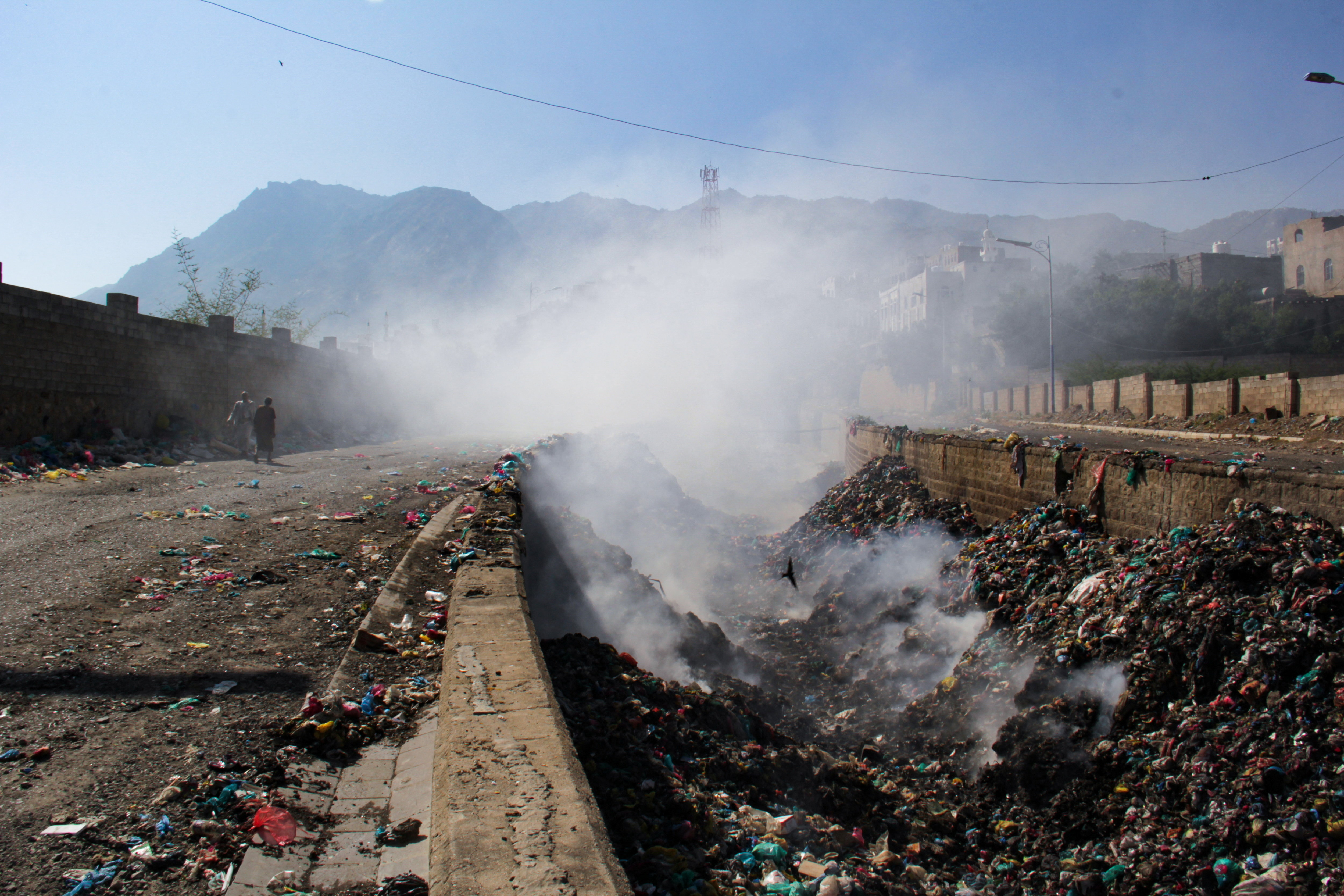
“This causes us suffocation and diseases, young and old. The children suffocate from the smoke,” Usaifira resident Abdo Hadi told Al Jazeera. “It is a foul smell, and on top of that they burn it.”
Hadi said the buildup and burning of waste are threatening the lives of his family and other residents, making already difficult living conditions even worse.
“We are besieged from every side, [with] neither gas nor petrol, and a black market,” he said.
Severe operational collapse
Taiz generates between 550 and 600 tonnes of waste daily, or about 16,500 to 18,000 tonnes per month. Mohammed Ibrahim, director of a cleaning initiative in Taiz, told Al Jazeera that waste collection has been severely affected since October 5.

Ibrahim said the cleaning initiative has also suffered from funding cuts, while supplies needed to carry out its work have been disrupted.
A sanitation worker described the grim reality while emptying a truck in Usaifira: “We are here with the rubbish in the Usaifira stream because of the war, and the people here are exposed to diseases from the rubbish, and we pile the waste in the stream, leave it to God.”
Escalating humanitarian crisis
The waste crisis is part of a wider breakdown of basic services in the city. On October 20, Laurent Bukera, the United Nations Humanitarian Coordinator for Yemen, expressed deep concern over the “rapidly deteriorating humanitarian and economic situation in Taiz”.
Bukera warned that road closures and insecurity were preventing vital supplies, including fuel, from entering the city and surrounding areas, leaving the health system “close to collapse”.
Emphasising the severe impact on hundreds of thousands of families, he warned that water production in the city has halved and alternatives are running out. Bukera called directly on the Houthis to urgently open safe passage for commercial goods, food, medicine, and humanitarian assistance in areas that they control.

The United Nations World Food Programme (WFP) has warned of an escalating humanitarian crisis in Taiz, saying conflict has cut off lifesaving assistance to 800,000 people, including 600,000 who depend on aid in the city.
El-Khidir Daloum, WFP representative and country director in Yemen, underlined the severity of the blockade.
“We are critically concerned about the escalating conflict, but even more so about the growing number of people we can no longer reach because of it,” Daloum said. “This is the kind of situation that can rapidly spiral into a humanitarian catastrophe if assistance cannot move safely and reach those who need it most.”
The blockade has also decimated local resources.
“Access roads have been cut off and that means that very little fuel, food or other supplies have reached the city since,” said Jens Laerke, spokesman for the UN’s Office for the Coordination of Humanitarian Affairs (OCHA).
He explained that water production has fallen dramatically and the cost of trucked water has tripled.
“So, you can imagine what that does to these people who are trapped there,” Laerke added.
Health risks are multiplying rapidly in this polluted environment.
UNICEF has raised concerns about widespread hunger, saying it screened more than 168,000 children in Taiz this year, with more than 52,000 found to be acutely malnourished. Ricardo Pires, a spokesman for the UN children’s agency, warned of logistical hurdles.
“Even when stocks are available, access constraints and disruptions to supply routes can make it more difficult for partners to transport supplies and for families to safely reach treatment,” Pires said.
